YouTube Ads: The Complete Guide for 2026
YouTube is the second biggest search engine and the biggest screen in many homes. It is also the channel where we see the most money wasted on ads nobody finishes watching. Here is how we plan, build and measure YouTube campaigns that pay for themselves.
Key takeaways
- YouTube ads run through Google Ads, so they share audiences, conversion data and bidding with your search campaigns. That connection is its biggest advantage.
- Pick the campaign type by goal: reach and view campaigns for awareness, Demand Gen for action, and remarketing to bring engaged viewers back.
- The first five seconds decide whether a skippable ad is watched. Put the hook, the brand and the problem up front.
- Judge YouTube on more than last-click conversions. View-through, branded search lift and blended new customer numbers show its real effect.
- Shorts, in-stream and in-feed placements need different edits of the same idea, not one video forced into every slot.
01Why YouTube ads belong in a serious media plan
Most brands we speak to have tried YouTube once, spent a few thousand on views, saw no sales in their last-click report and turned it off. We understand why. But in accounts where YouTube is planned properly, it tends to do something few other channels do: it makes every other channel cheaper.
People who watch a good YouTube ad search for the brand later, click Meta retargeting ads more often and convert better on landing pages. That effect is harder to see in a dashboard than a search conversion, which is why YouTube is so often undervalued. Our main site covers the basics in what YouTube ads are and why they matter. This guide goes further into how we actually run them.
YouTube also carries real intent. People search it for reviews, tutorials and comparisons. An ad that shows up next to a product review video reaches someone actively weighing a purchase, which is closer to search behaviour than to scrolling a social feed.
02YouTube ad formats explained
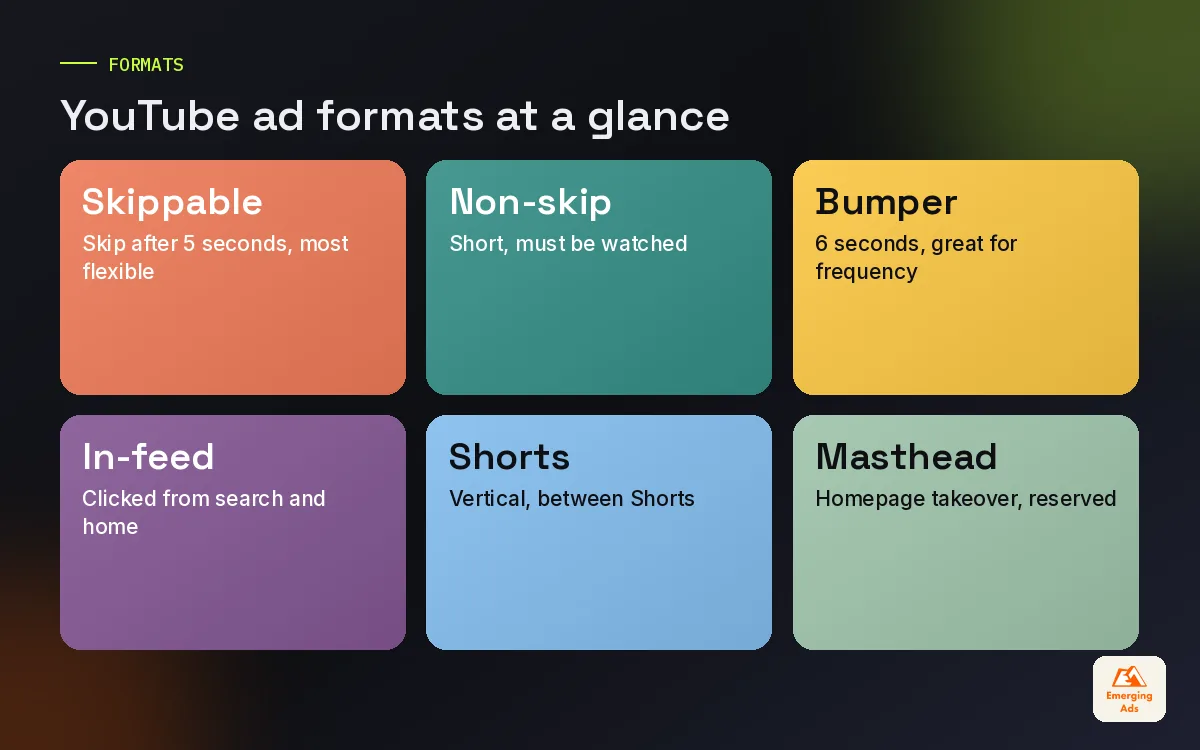
The formats have shifted over the years. Here are the ones that matter for most advertisers right now.
| Format | How it works | Best for |
|---|---|---|
| Skippable in-stream | Plays before, during or after videos; viewers can skip after 5 seconds | Most performance and consideration campaigns |
| Non-skippable in-stream | Short ads viewers must watch in full | Reach and message delivery when the story is tight |
| Bumper ads | 6-second non-skippable ads | Frequency and reminders alongside longer ads |
| In-feed video ads | Thumbnail and headline in search results and the home feed; plays when clicked | Tutorials, reviews and longer explanations |
| Shorts ads | Vertical ads between Shorts in the Shorts feed | Mobile-first audiences and TikTok-style creative |
Our YouTube in-stream ads service focuses on the first two, because that is where most performance budgets land. In-feed ads are underrated for products that need explaining, because the viewer chose to click and is ready to watch for longer.
03Choosing the right campaign type
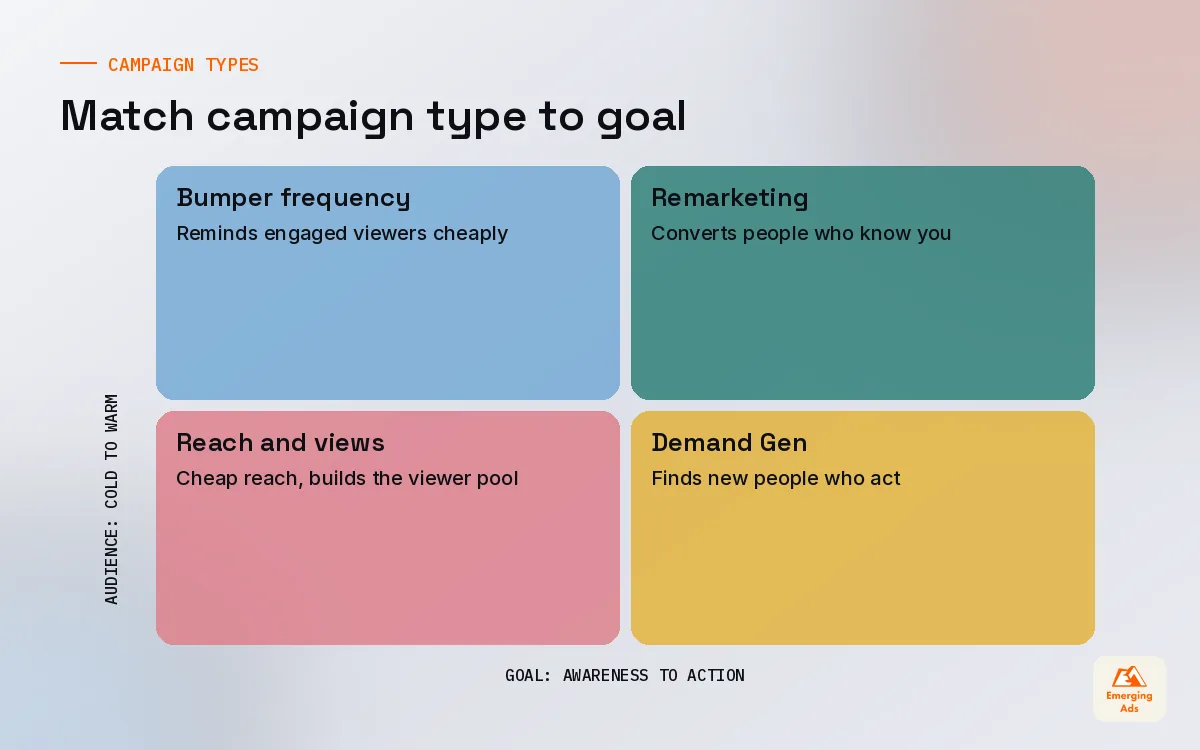
Inside Google Ads, the campaign type decides which formats you can use and what the system optimises for. Picking the wrong one is the most common setup mistake we fix.
Video reach and view campaigns
These optimise for impressions or views at the lowest cost. They are the right choice when your goal is awareness or building a remarketing pool of people who watched a meaningful part of your ad. They are the wrong choice when you expect direct sales.
Demand Gen campaigns
Google has been moving action-focused video advertising into Demand Gen, which runs across YouTube in-stream, in-feed and Shorts, plus Discover and Gmail. It optimises for conversions and suits most brands that want YouTube to drive leads or purchases. We cover setup in detail on our YouTube Demand Gen campaigns page.
Remarketing
Remarketing to people who watched your videos, visited your site or engaged with your channel is often the most efficient YouTube spend in an account. It works especially well for longer consideration products. Our YouTube remarketing setup layers audiences by how engaged people were.
Performance Max
Performance Max campaigns can also serve on YouTube if you give them video assets. That can work, but you get limited visibility of what YouTube specifically contributed. For brands that want to understand YouTube, we prefer a dedicated campaign alongside it.
04Targeting that works on YouTube
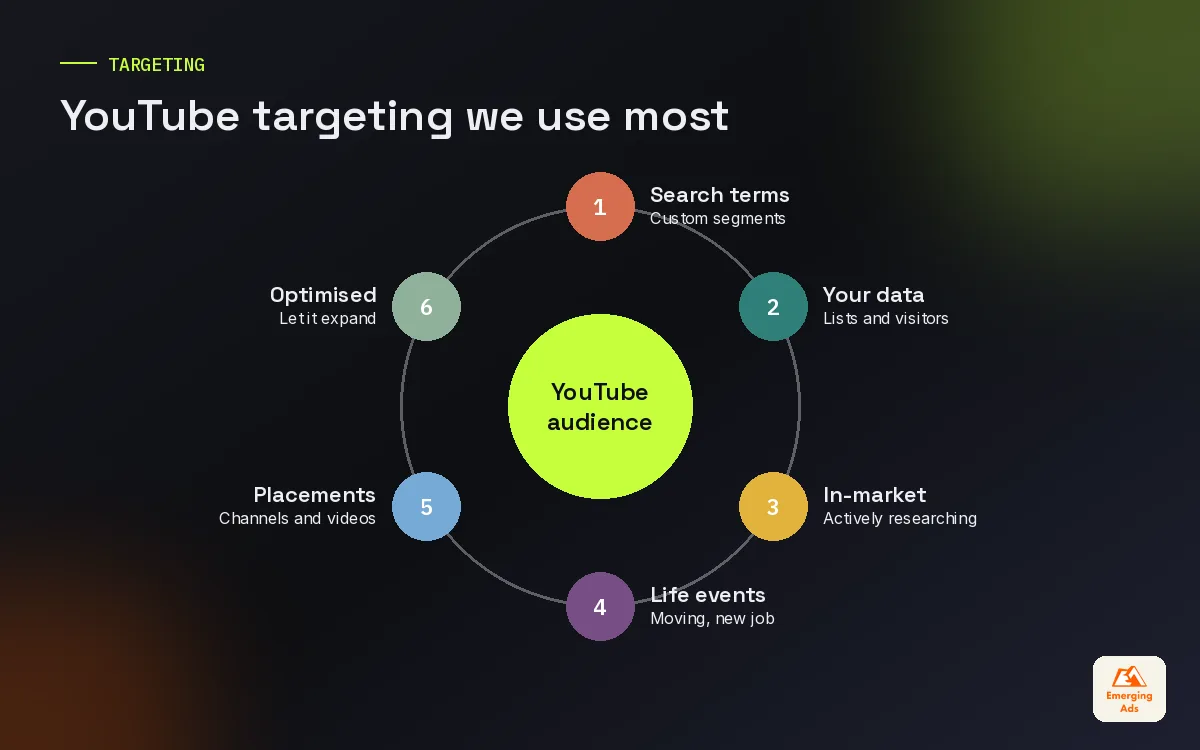
YouTube inherits Google’s audience tools, which makes it one of the most flexible channels to target. The options we use most:
- Custom segments built from search terms. Reach people who have recently searched for terms related to your product on Google. This is one of YouTube’s strongest targeting options and many advertisers never use it.
- Your data. Customer lists, site visitors and people who engaged with your channel or videos.
- In-market and life event audiences. Google’s own signals about people actively researching a category or going through a change such as moving home.
- Placements and topics. Specific channels or video themes. Useful for niche products, but easy to over-restrict.
- Optimised or broad targeting on Demand Gen. Once conversion data is flowing, letting the system expand beyond your signals often lowers costs.
Always check where your ads actually ran. The placement report shows channels and videos, and excluding low-quality placements such as children’s content or mobile games aimed at kids is one of the fastest ways to reduce wasted spend.
We also set content exclusions at account level from day one: sensitive topics, embedded videos on low-quality sites, and live streams where brand safety matters. On new accounts, we review placements weekly for the first month, then monthly once the exclusion lists have settled. It is a small routine that protects both budget and reputation, and it is one of the first things we check when auditing a YouTube account someone else has been running.
05Creative that holds attention
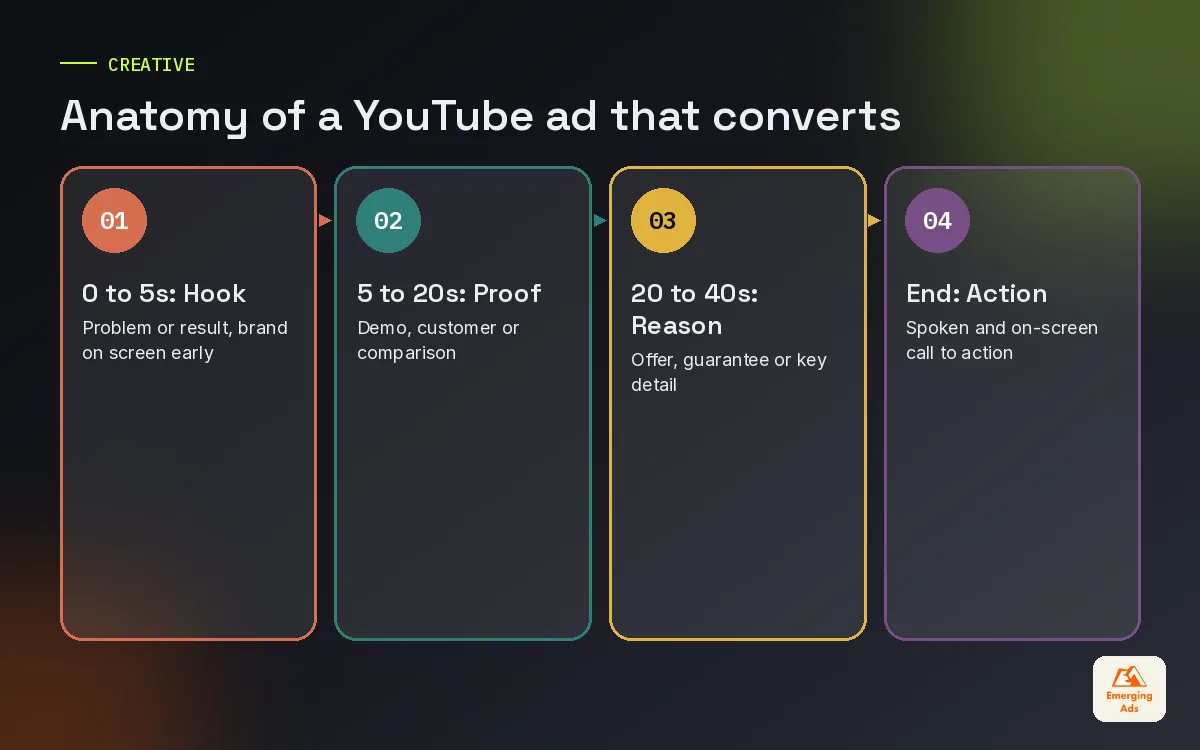
A skippable ad has five seconds to earn the next twenty-five. Most brand videos spend those five seconds on a logo animation. Here is the structure we brief for performance-focused YouTube ads.
- 0 to 5 seconds: the hook. Name the problem or show the result. Get the brand or product on screen early, even briefly.
- 5 to 20 seconds: the proof. Show the product working, a real customer, a comparison or a demonstration.
- 20 to 40 seconds: the reason to act now. Offer, guarantee, or the one detail that removes doubt.
- Final seconds: a clear call to action, spoken and on screen, matching the landing page.
Make separate edits for each placement. A 30-second horizontal cut for in-stream, a 6-second bumper that repeats the core line, and a vertical 20-second edit for Shorts. Our video content production team usually films once and cuts four or five versions from the same shoot.
Nobody skips an ad because it is an ad. They skip it because the first five seconds gave them no reason to stay.
06What YouTube ads cost and how to budget
YouTube pricing depends on the campaign type. View campaigns typically charge per view, where a view is counted when someone watches a set length of the ad or interacts with it. Reach campaigns and many other formats charge per thousand impressions. Demand Gen campaigns bid towards conversions.
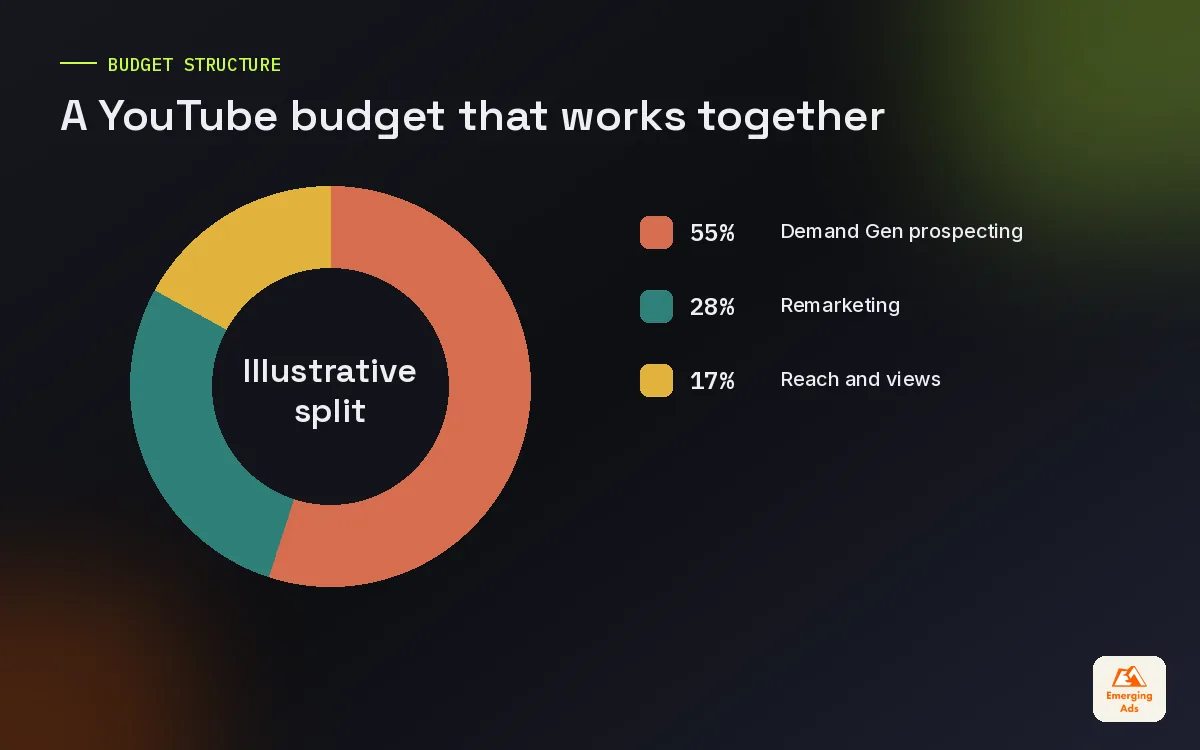
Because costs vary so much by market, audience and creative, we do not quote typical prices. What we do suggest is a structure:
| Stage | Budget share (illustrative) | Goal |
|---|---|---|
| Remarketing to engaged viewers and site visitors | 20 to 30 percent | Convert people who already know you |
| Demand Gen prospecting | 50 to 60 percent | Find new customers who act |
| Reach or view campaigns | 10 to 20 percent | Build the viewer pool for remarketing |
The split is an example to adapt, not a benchmark. The key idea is that the pieces support each other. Awareness spend feeds remarketing, and remarketing converts the people awareness found. Running only one piece rarely shows YouTube at its best. For online stores specifically, our YouTube ads for e-commerce approach links product feeds to video for shoppable placements.
07Measuring YouTube ads honestly
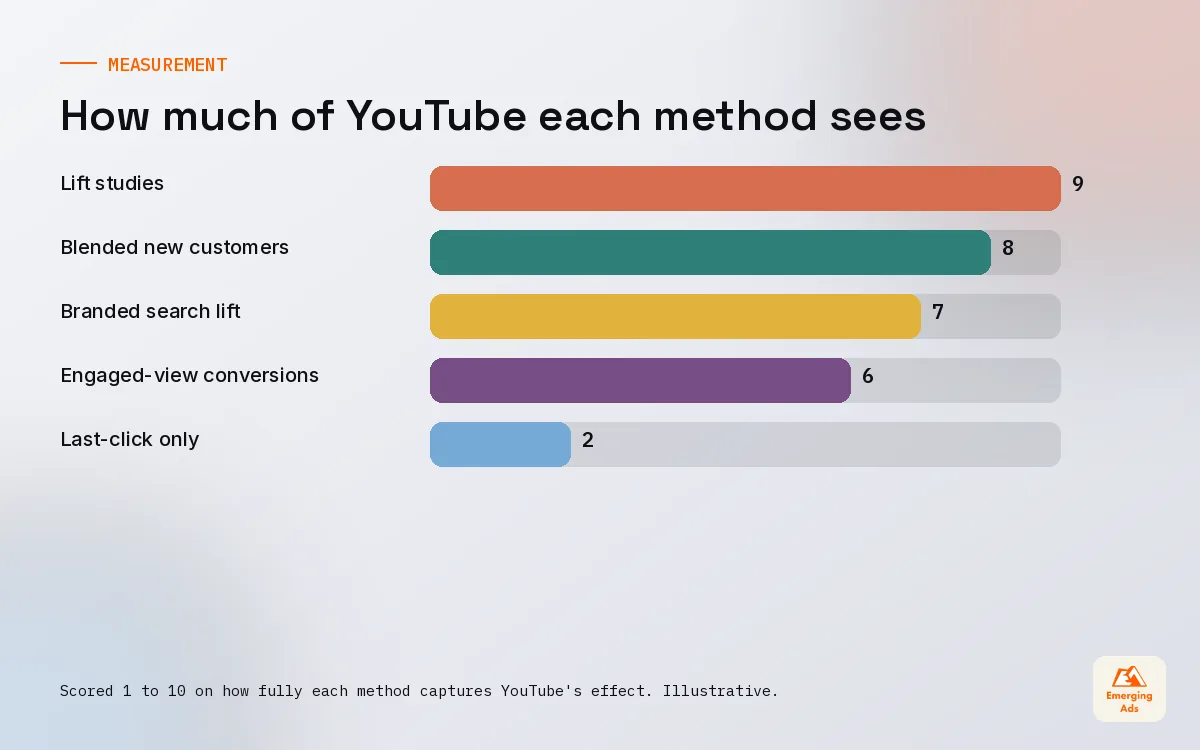
YouTube is where last-click attribution does the most damage. Someone watches your ad on a TV in the evening, then searches your brand on their phone the next day and buys. Last-click gives the sale to branded search, and YouTube looks like it did nothing.
We look at a wider set of signals:
- Conversions including engaged-view conversions in Google Ads, which count people who watched a meaningful part of the ad and converted later.
- Branded search volume before and during YouTube campaigns.
- Blended new customer numbers from your store or CRM.
- Brand lift and conversion lift studies when budgets qualify, which compare exposed and unexposed groups.
None of these is perfect on its own. Together they give a far fairer picture. For clients who want a more formal view, we build attribution modelling that credits YouTube for the role it actually plays. It all depends on a solid conversion tracking setup underneath.
08YouTube ads mistakes we fix most often
- Using a brand film as a performance ad. Beautiful, slow openings get skipped.
- Buying views and expecting sales. View campaigns do exactly what they say. Use Demand Gen for action.
- Never checking placements. Budget quietly drains into kids’ channels and low-quality apps.
- One video for every placement. A horizontal 60-second cut does not work in the Shorts feed.
- Turning it off after two weeks. YouTube’s effect builds over time. Give it a fair window and judge it on blended results.
YouTube is not the cheapest channel to get right, but it is one of the most durable once it works. If you want help planning it alongside search and social, our YouTube advertising service and wider Google Ads management are built to run as one account. You can also see how we approach paid media on the oldemergingads.com homepage.
Frequently asked questions
Straight answers to what clients ask us most about youtube ads.
How much do YouTube ads cost?
What is the minimum budget for YouTube ads?
Are YouTube ads worth it for small businesses?
What is the best length for a YouTube ad?
What are YouTube Demand Gen campaigns?
Can I run YouTube ads without a YouTube channel?
Do YouTube Shorts ads work?
How do I target competitors' customers on YouTube?
Why do my YouTube ads show few conversions?
Should YouTube ads link to my homepage?
How long before YouTube ads show results?
Spending on YouTube and not sure what it is doing?
Send us access to your Google Ads account. We will show you which YouTube campaigns are driving real customers, which are buying cheap views, and what we would change first.
Book your free audit